















Gingival abscess: what is it and why does it occur?
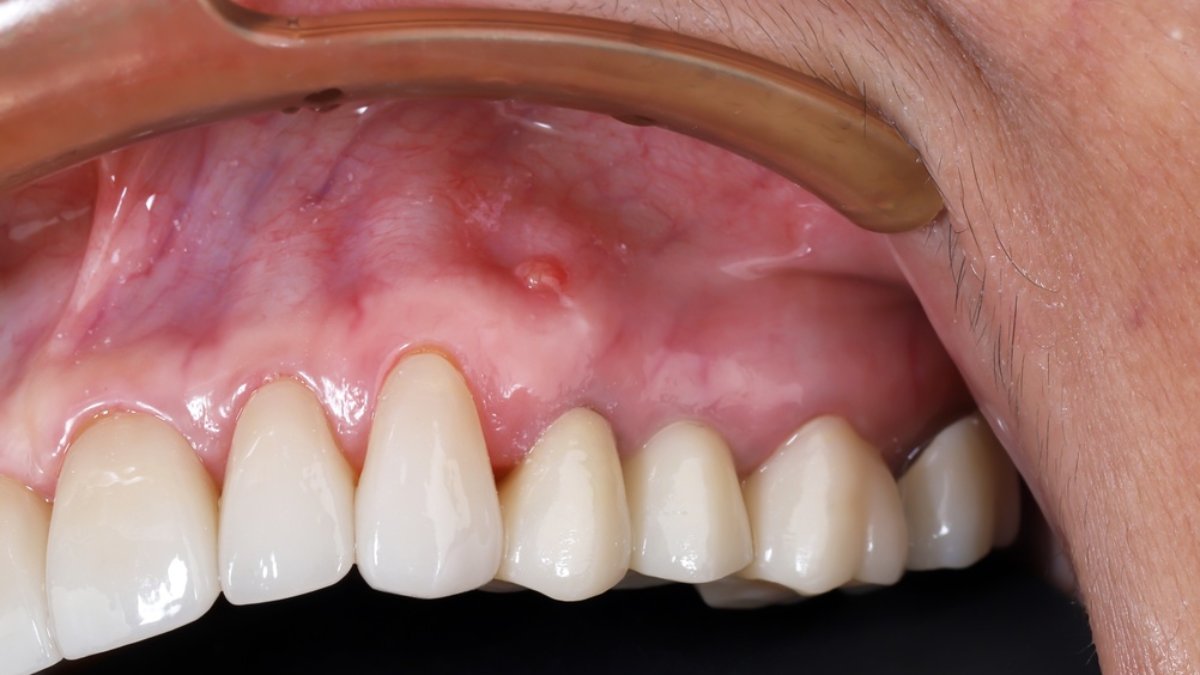
A gum abscess is a localized collection of pus that forms in the gum tissue as a reaction to a bacterial infection. It commonly develops because of plaque buildup, a foreign object trapped in the gum or an untreated cavity. Treatment usually involves draining the collection and removing the cause of the infection.
In short:
- A gum abscess can occur in both children and adults, regardless of age.
- Some forms may be almost painless because pus drains continuously.
- Antibiotics are recommended only in certain situations determined by the dentist.
- Definitive treatment usually involves removing the source of the infection.
- Prompt dental evaluation helps prevent the infection from spreading to other areas.
- Proper oral hygiene reduces the risk of another episode.
What is a gum abscess?
A gum abscess is a specific type of dental abscess located exclusively in the gum tissue, without affecting the tooth root or the surrounding bone. It forms when bacteria enter the gum tissue, usually through a small injury or because food debris becomes trapped in the area.
It is important to distinguish it from other types of dental abscesses, such as a periapical abscess located at the tip of the tooth root or a periodontal abscess involving the deeper supporting structures of the tooth. Each type requires a specific treatment approach determined by the dentist.
What causes a gum abscess?
The causes of a gum abscess can vary and are generally related to bacteria entering the gum tissue.
- a foreign object, such as a food fragment, trapped between the tooth and gum;
- plaque buildup or untreated tartar;
- an advanced cavity that allows bacteria to reach the surrounding tissues;
- an accidental local injury to the gum.
Identifying the exact cause helps the dentist recommend the appropriate treatment for each situation.
What are the signs of a gum abscess?

A gum abscess usually appears as a localized swelling of the gum, accompanied by redness and tenderness.
| Common sign | Observation |
|---|---|
| Localized swelling | Visible on the gum near a tooth |
| Redness of the tissue | May be accompanied by a sensation of local warmth |
| Tenderness to touch | Intensity varies from one case to another |
| Unpleasant taste | Sometimes associated with drainage of pus |
Recognizing these signs early supports prompt evaluation and treatment by the dentist.
Painless gum abscess: what does it mean?
In some cases, a gum abscess may be almost painless, especially when the pus finds a natural drainage pathway through the gum tissue. The reduced pressure inside the abscess can explain the absence of severe pain even though the infection is still present.
Even without pain, a dental evaluation is still recommended to identify and treat the underlying cause.
Gum abscess in children: what should you know?
A gum abscess in children can develop for reasons similar to those seen in adults, such as a foreign object trapped between the teeth or insufficient oral hygiene. Children may show discomfort by avoiding chewing on the affected side or by displaying noticeable sensitivity when the area is touched.
AP Stomatologic Clinic in Ploiești provides pediatric dentistry services so children can receive care adapted to their age.
How is a gum abscess diagnosed?
A gum abscess is diagnosed during a dental consultation through direct examination of the affected area and, when necessary, an X-ray to rule out other possible causes.
A consultation at AP Stomatologic Clinic allows the diagnosis to be confirmed and an appropriate treatment plan to be recommended.
What does gum abscess treatment involve?
Treatment for a gum abscess usually involves draining the collection of pus and removing the cause of the infection, such as a foreign object or accumulated tartar. This is followed by clear recommendations regarding care of the affected area.
When the infection is associated with a problem involving the tooth root, the dentist may recommend endodontic treatment to fully address the condition.
Are antibiotics necessary for a gum abscess?
Antibiotics for a gum abscess are recommended only in certain situations, such as when the infection shows signs of spreading beyond the original area. The decision belongs exclusively to the dentist following an individual evaluation.
In most cases, draining the abscess and removing the underlying cause remain the main steps of treatment.
What happens in complex cases?
When a gum abscess is extensive or involves deeper structures, the dentist may recommend an evaluation within the oral and maxillofacial surgery service. This approach is reserved for cases that require more extensive intervention.
If an affected tooth can no longer be maintained functionally, the dentist may also discuss the option of a tooth extraction as part of the treatment plan.
What role does laser therapy play in gum abscess treatment?
Laser therapy may be used in certain cases as part of gum abscess treatment to help reduce bacteria in the affected tissue. It is a modern method that allows a high degree of precision in the treated area.
Following the evaluation, the dentist determines whether this approach is suitable for each individual patient.
How can you prevent a gum abscess?
Maintaining rigorous oral hygiene through proper brushing and flossing reduces the risk of plaque buildup around the gums. Regular dental check-ups complement daily care and allow any changes to be detected early.
Avoiding the habit of inserting sharp foreign objects into the mouth, such as toothpicks or other materials, also reduces the risk of developing a localized gum abscess.
Next steps
- schedule a consultation if you notice swelling of the gums;
- maintain rigorous oral hygiene with proper brushing and flossing;
- follow your dentist's recommendations throughout treatment.
Remember:
- an accurate diagnosis can only be established following a dental consultation;
- the appropriate treatment depends on the cause identified in each individual case.
A gum abscess is a condition that can be managed effectively through prompt evaluation and treatment adapted to the identified cause. Schedule a consultation at AP Stomatologic Clinic for a complete evaluation and a solution suited to your situation.
Frequently asked questions about gum abscesses
Can a gum abscess go away on its own?
A gum abscess generally does not go away without treatment that removes the source of the infection. Even if the discomfort temporarily decreases, a dental evaluation is still necessary to fully resolve the condition.
How long does healing take after draining a gum abscess?
Healing varies depending on the size of the abscess and the identified cause. In general, discomfort decreases significantly during the first few days after treatment.
Can a gum abscess come back?
Yes, especially if the triggering factor, such as a foreign object or poor oral hygiene, is not completely eliminated. Following the dentist's recommendations reduces the risk of another episode.
Is a gum abscess contagious?
No, a gum abscess is not transmitted from one person to another. It results from a localized infection caused by bacteria already present in the mouth.
What is the difference between a gum abscess and a tooth abscess?
A gum abscess affects the gum tissue without involving the tooth root. A dental abscess, such as a periapical abscess, is located around the tooth root and usually has a different cause, such as an untreated cavity.
Disclaimer: The information in this article is educational and general in nature. It does not replace medical consultation, diagnosis or treatment provided by a doctor or another healthcare professional.
Sources
- “Periodontal Abscess: Symptoms, Causes & Treatment.” Cleveland Clinic, Periodontal Abscess: Symptoms, Causes & Treatment. Accessed August 28, 2026.
- “Abscess: Types, Symptoms, Causes & Treatment.” Cleveland Clinic, Abscess: Types, Symptoms, Causes & Treatment. Accessed August 28, 2026.
- “Tooth Abscess: Symptoms, Causes & Treatment.” Cleveland Clinic, Tooth Abscess: Symptoms, Causes & Treatment. Accessed August 28, 2026.