









Gingival retraction: why does it occur, when is a medical consultation recommended?
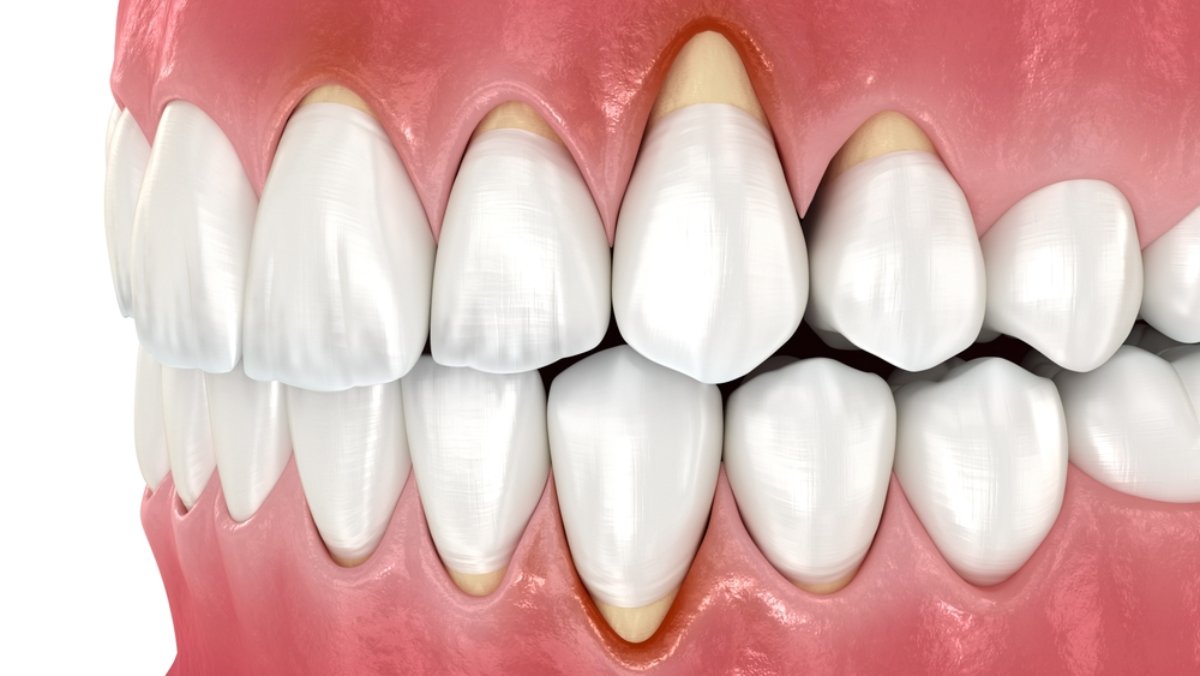
Gum recession is the gradual movement of the gum tissue away from the teeth, partially exposing the root surface. It can occur because of overly aggressive brushing, periodontal disease or other individual factors. Treatment aims to stop its progression and protect the exposed area through an approach established by the dentist following an evaluation.
In short:
- Gum recession can affect one tooth or several teeth, with different degrees of severity.
- Tooth sensitivity is often one of the first noticeable signs.
- It can also occur around dental implants, not only around natural teeth.
- Diagnosis is established through a simple measurement performed by the dentist.
- Laser therapy is one of the modern options used as part of treatment.
- Early evaluation helps determine the most appropriate approach.
What exactly is gum recession?
Gum recession is a process in which the gum tissue moves away from the crown of the tooth, gradually exposing the root surface. It may develop slowly over several years or progress more quickly, depending on the factors involved.
This process is commonly encountered in dental practice and may affect a single tooth or several teeth, with different degrees of severity from one area to another.
What causes gum recession?
The causes of gum recession are multiple and may often act together rather than independently. Age and daily oral care habits can also influence the rate at which this process develops.
- brushing with excessive force or using a hard-bristled toothbrush;
- periodontal disease associated with inflammation of the supporting tissues;
- irregular tooth position within the dental arch;
- individual factors, such as genetic predisposition.
Identifying the main cause helps the dentist recommend an approach tailored to each patient.
What are the signs of gum recession?
The signs of gum recession may be subtle at first, which is why regular dental evaluations help detect them early.
| Common sign | Observation |
|---|---|
| Visible exposure of the tooth root | Often noticed while brushing or when looking in the mirror |
| Sensitivity to cold or sweet foods | Especially noticeable in the exposed area |
| Uneven gumline | Visible between neighboring teeth |
| More frequent food accumulation | Localized in the affected area |
A dental evaluation allows the exact degree of recession and the appropriate solution to be determined.
What degrees of severity can gum recession have?
Gum recession is usually classified according to severity, from mild forms to more extensive forms that affect a larger area of the root surface. This classification helps the dentist choose the appropriate therapeutic approach.
- mild recession: minimal root exposure, often without significant discomfort;
- moderate recession: noticeable sensitivity and clearer root exposure;
- extensive recession: affects a larger area, sometimes involving several teeth at the same time.
The degree identified during evaluation guides the dentist toward a conservative solution or, when necessary, a more extensive approach.
Can gum recession also occur around dental implants?
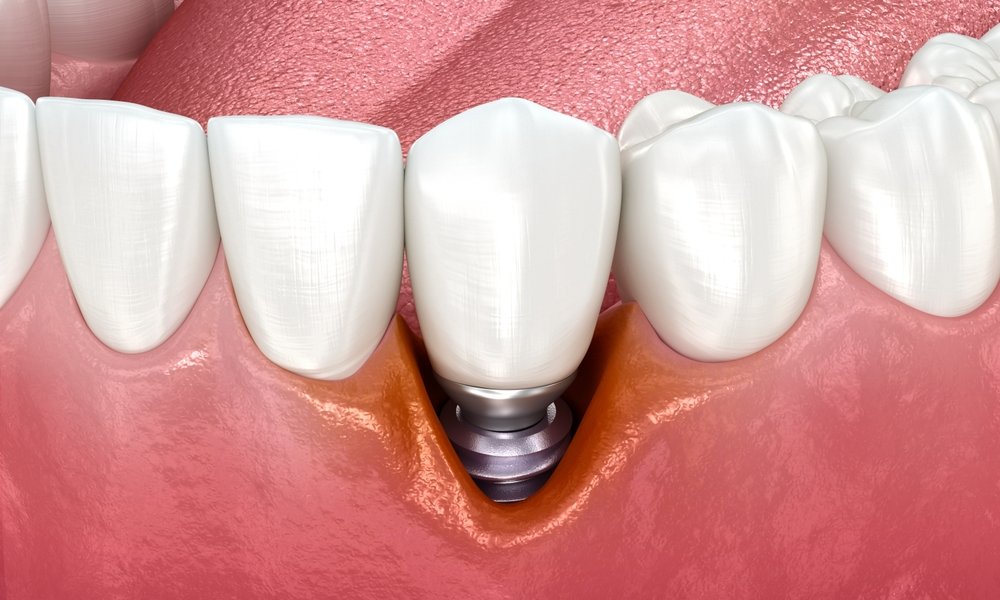
Yes, gum recession can also occur around a dental implant, similarly to what happens around natural teeth. The tissue surrounding the implant requires the same careful attention and rigorous hygiene to maintain its appearance and function over the long term.
Regular check-ups allow this area to be monitored and the oral care routine to be adjusted in time when necessary.
How is gum recession diagnosed?
Gum recession is diagnosed through a dental evaluation during which the dentist measures the gum tissue around each tooth using a specific instrument.
A consultation at AP Stomatologic Clinic allows the degree of recession to be established and a care plan adapted to the situation to be recommended.
What does gum recession treatment involve?
Treatment for gum recession aims to stop its progression and protect the exposed area rather than completely restore the lost gum tissue. The approach can range from professional dental cleaning in mild cases to more complex procedures when necessary.
For cases that require further evaluation, the clinic's periodontology team establishes a personalized treatment plan adapted to the identified stage.
What role does laser therapy play in gum recession treatment?
Laser therapy may be used as part of treatment for gum recession, particularly to reduce sensitivity and support the health of the tissue surrounding the affected area. It is a modern method that offers a high degree of precision in the treated area.
Following the evaluation, the dentist determines whether this approach is appropriate for each patient's situation.
How much does gum recession treatment cost?
The cost of gum recession treatment depends on the degree of severity and the procedures recommended after evaluation. The dentist provides all necessary details before treatment begins.
For an accurate estimate, you can consult the price list of AP Stomatologic Clinic in Ploiești.
How can you prevent gum recession from getting worse?
Using a gentle brushing technique with a soft-bristled toothbrush reduces the risk of worsening gum recession. Regular dental check-ups complement daily care and allow the oral hygiene routine to be adjusted in time.
Avoiding the use of teeth as tools for various activities, as well as giving up habits that place pressure on the gums, also supports long-term tissue health.
Next steps
- schedule a consultation if you notice root exposure or tooth sensitivity;
- adopt a gentle brushing technique using a soft-bristled toothbrush;
- follow your dentist's recommendations throughout treatment.
Remember:
- a correct diagnosis can only be established following a dental consultation;
- the appropriate treatment depends on the degree of recession identified by the dentist.
Gum recession is a common process that can be effectively managed through early evaluation and treatment tailored to the identified cause. Schedule a consultation at AP Stomatologic Clinic in Ploiești for a complete evaluation and a solution suited to your situation.
Frequently asked questions about gum recession
Can gum recession be completely reversed?
Treatment does not completely restore lost gum tissue, but it can stop progression and protect the exposed area. The dentist determines the appropriate approach according to the degree of recession identified.
At what age does gum recession occur most often?
Gum recession can occur at any age, but it is more commonly encountered as we get older. Regular evaluation helps monitor this condition regardless of age.
Can aggressive brushing cause gum recession?
Yes, brushing with excessive force or using a hard-bristled toothbrush is one of the common factors associated with gum recession. Adjusting the brushing technique supports gum health.
Does gum recession only affect natural teeth?
No, gum recession can also occur around dental implants, which is why proper hygiene and regular check-ups remain important in these cases as well.
Is surgery necessary for gum recession?
Not always. Many cases are managed through professional dental cleaning and adjustments to the oral care routine, while a more extensive intervention is discussed only when necessary following a complete evaluation.
Disclaimer: The information in this article is educational and general in nature. It does not replace medical consultation, diagnosis or treatment provided by a doctor or another healthcare professional.
Sources:
- "Gum Recession: Causes, Prevention, Surgery & Treatment." Cleveland Clinic, my.clevelandclinic.org/health/diseases/22753-gum-recession. Accessed August 28, 2026.
- "Receding Gums: Treatment, Causes, Pictures, and Prevention." Medical News Today, www.medicalnewstoday.com/articles/312992. Accessed August 28, 2026.
- "Periodontitis: Symptoms, Causes & Treatment." Cleveland Clinic, my.clevelandclinic.org/health/diseases/16620-periodontitis. Accessed August 28, 2026.